
Microneedling guide
Microneedling pen vs. derma stamp: which is right for you?
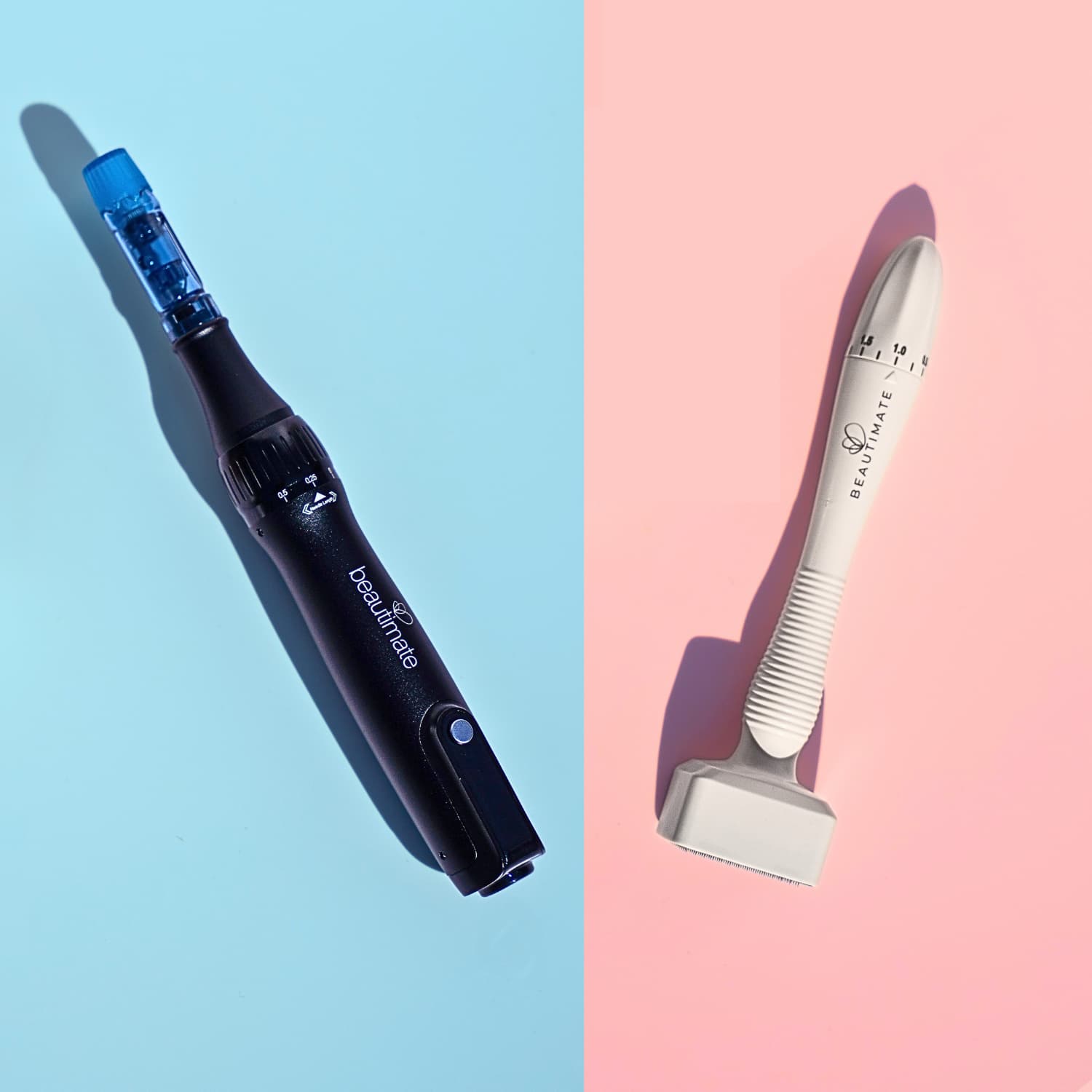
The truth is, neither tool is "better." The best choice depends on your skin goals, budget, and how you like to microneedle. Most advice comes from brands that only sell one of them — so of course they crown their own tool the winner. At Beautimate we make and sell both the Microneedle Pen and the Adjustable Derma Stamp, which means we have no reason to push you toward one over the other. Our only goal is to match you with the tool that fits your skin, your goals, and how much effort you actually want to put in.
Both tools do the same fundamental thing: they create tiny, controlled micro-channels in the skin. Microneedling is commonly used to support smoother-looking skin and improve the appearance of texture, and it may help your serums absorb better. The difference between a pen and a stamp isn't what they do — it's how they do it, and how that feels in your hand. This guide breaks down the honest pros and cons of each so you can choose with confidence.

The quick answer
Here's the short version before we get into detail:
- Choose a microneedling pen if you want the easiest, most consistent experience, faster sessions, and a motor that controls speed and depth for you.
- Choose a derma stamp if you want a simple, no-battery tool, precise spot-treating of specific areas, and full manual control at a lower price point.
Neither tool is objectively better — the right choice depends on your goals, budget, and preferred routine.
How each tool actually works
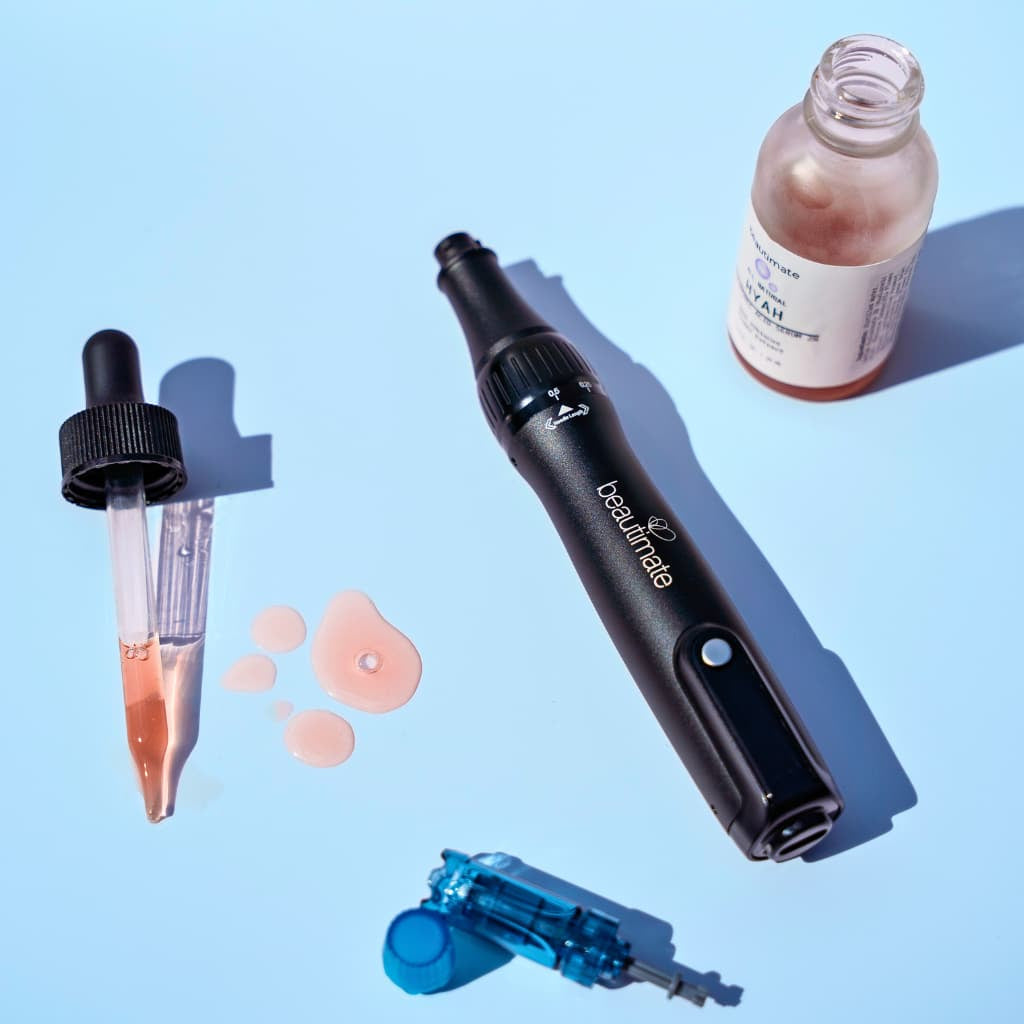
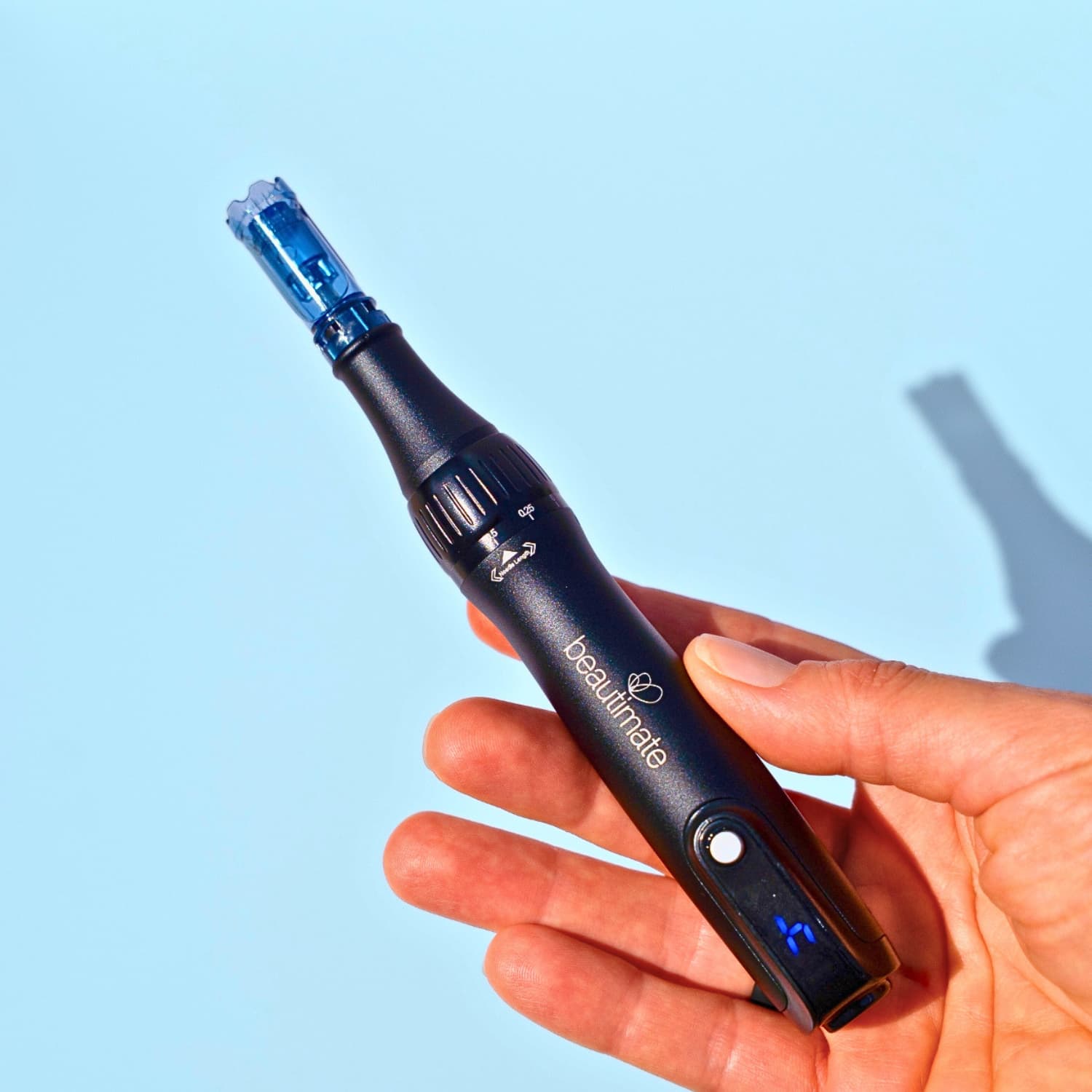
A microneedling pen uses a small motor to drive a cluster of needles straight in and out of the skin very quickly at a depth you set on a dial. You glide it across the skin and the motor does the pressing for you — the depth stays consistent whether you're on your first pass or your fiftieth. Think of it like an electric toothbrush: you guide it while the motor does the repetitive work.
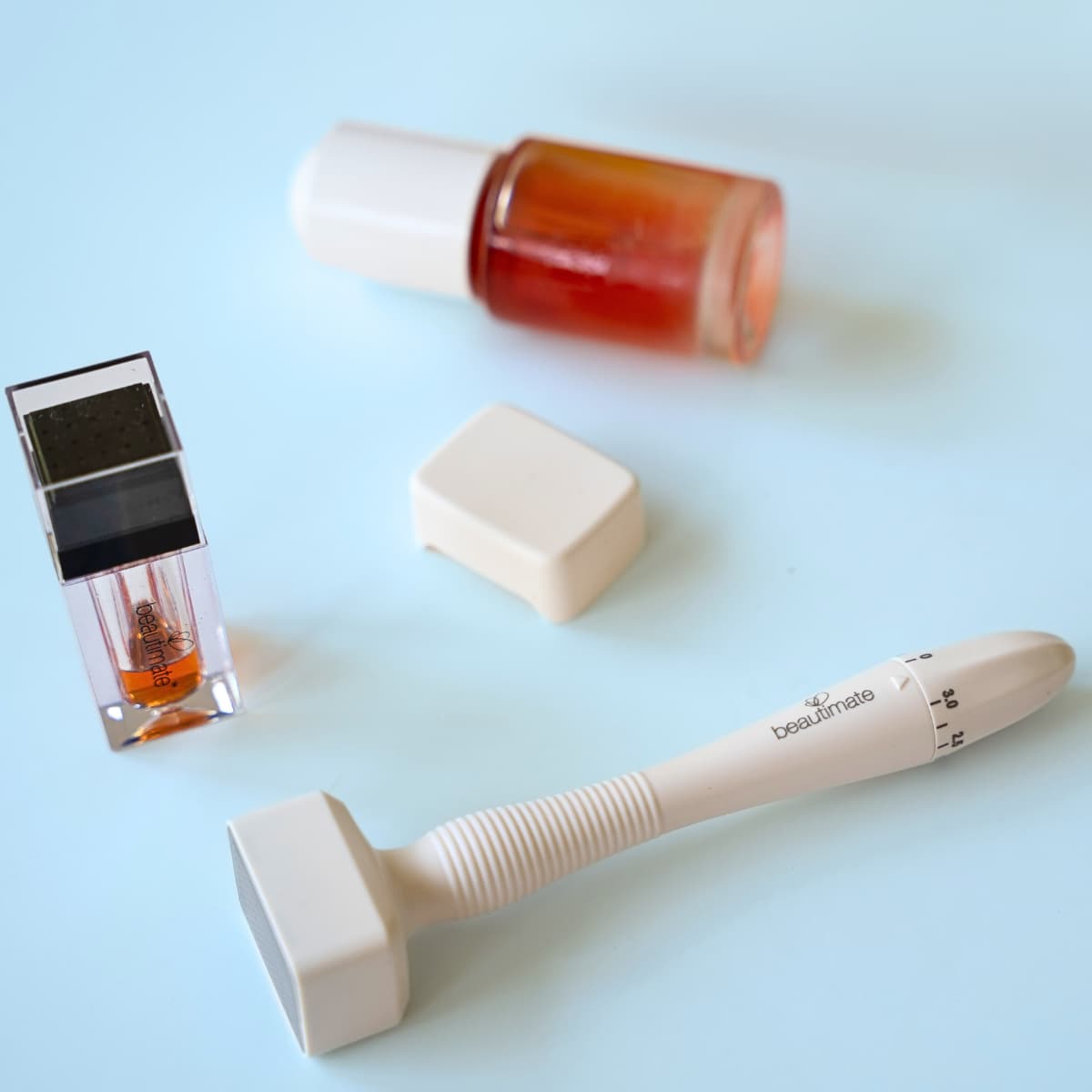
A derma stamp is a manual tool with a flat head of fine needles. You press it straight down and lift, one small section at a time. There's no motor and no battery — you control the pressure, rhythm, and coverage entirely by hand. Adjustable stamps let you dial in the needle length for different areas. Think of it like using a stamp — press, lift, and move on to the next section.

The microneedling pen: pros and cons
The pen's whole appeal is control that doesn't rely on you. Because the motor sets the speed and the dial sets the depth, your technique matters far less than it does with a manual tool — which is exactly why so many beginners find it the more forgiving starting point.
Pros of the pen
- Consistent depth every pass. You dial it in once; the motor keeps it steady across the whole session.
- Easier on beginners. Less reliance on your own pressure and rhythm means fewer technique mistakes.
- Faster full-face sessions. The rapid motorized motion covers zones quickly and evenly.
- Even coverage. Gliding cross-hatch passes make it simple to avoid over- or under-treating a spot.
- Great for product absorption and smoother-looking, more radiant skin. The controlled, uniform channels are ideal for a light, regular routine.
Cons of the pen
- Higher upfront cost. A motorized device costs more than a simple manual stamp.
- Needs charging and sterile cartridges. A little more upkeep — battery plus single-use cartridge each session.
- Slight learning curve on gliding technique. Keeping it upright and moving at a steady pace takes a session or two to feel natural.
The derma stamp: pros and cons
The stamp trades the motor for simplicity and precision. Because you press straight down in one spot at a time, it's exceptional for targeting specific areas — and with nothing to charge and no cartridges to swap, it's the lower-maintenance, lower-cost option.

Pros of the stamp
- Precise spot-treating. Pressing straight down is ideal for focusing on a specific area or a stubborn patch of texture.
- No battery, no cartridges. Nothing to charge or replace — just clean, adjust, and go.
- Lower cost. A simple manual tool is the more budget-friendly way to start microneedling at home.
- Full manual control. You decide the pressure and rhythm on every press, which some people prefer.
- Straight vertical needle entry. Pressing down (rather than dragging) means clean, perpendicular channels.
Cons of the stamp
- Depends on your technique. Consistent depth and even coverage rely on your own hand — there's no motor to keep it uniform.
- Slower for full-face routines. Stamping section by section takes longer than gliding a pen.
- Easier to be uneven. Without a motor, pressure can vary from spot to spot until you get the hang of it.
Can you get similar results with both?
Yes. When used correctly, both a microneedling pen and a derma stamp create controlled micro-channels in the skin. The biggest difference isn't the potential outcome — it's how easy each tool makes the process.
The pen offers faster, more consistent treatments across larger areas, while the stamp gives you greater manual control for targeted applications.
Pen vs. stamp at a glance

| What matters to you | Microneedling pen | Derma stamp |
|---|---|---|
| Ease of use | Easiest — motor does the work | Simple, but relies on technique |
| Depth consistency | Set by dial, motor-controlled | Controlled by your hand |
| Precision spot-treating | Good | Excellent |
| Full-face speed | Faster | Slower |
| Maintenance | Charge + sterile cartridges | Just clean and go |
| Upfront cost | Higher | Lower |
| Noise | Quiet motor | Silent |
| Best for beginners | Very beginner-friendly | Beginner-friendly with a little practice |
Which one is right for your skin goals?

The easiest way to decide is to start from what you actually want to achieve:
- Smoother-looking, more radiant skin and easy upkeep → the Microneedle Pen. Its consistent, motorized passes make a light, regular routine simple.
- Targeting a specific area or patch of texture → the Adjustable Derma Stamp. Pressing straight down gives you focused, precise control where you want it.
- Total beginner who wants the most forgiving tool → the Pen, since the motor takes technique out of the equation.
- Budget-conscious or you prefer a simple, no-battery tool → the Stamp.
A note on safety (read this either way)
Whichever tool you choose, microneedling creates tiny openings in the skin, so the same safety rules apply to both:
- Always start with clean skin, clean hands, and a fresh, sterile needle head or cartridge.
- Start shallow (around 0.25–0.5 mm) for at-home use, and keep sessions gentle.
- Never treat over active acne, cold sores, eczema, sunburn, open wounds, or moles.
- Skip microneedling if you're pregnant or nursing, on isotretinoin (or within 6 months of stopping), or prone to keloid scarring — check with a professional first.
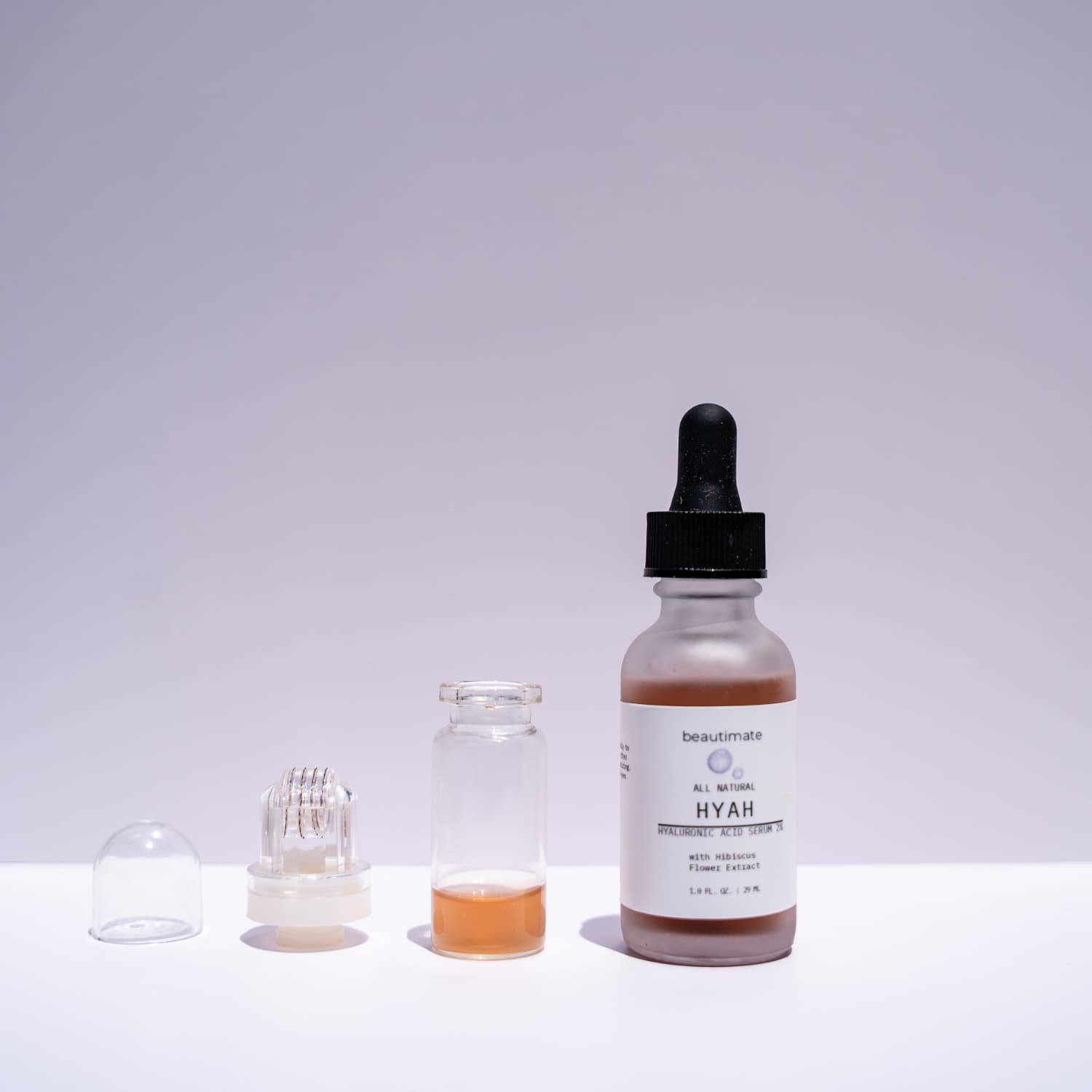
- Follow with a simple hydrating serum such as Hyah Serum, protect with daily sunscreen, and give your skin time to settle between sessions.
Deeper, more aggressive treatment is best left to trained professionals in a clinic setting — both the Beautimate pen and stamp are built for safe, effective at-home use.
Which one would we choose?
If you want the easiest, fastest routine with consistent results, we'd recommend the Microneedle Pen.
If you prefer a lower-cost tool with complete manual control and precise spot treatments, choose the Adjustable Derma Stamp.
There's no wrong answer — the best microneedling tool is the one you'll actually use consistently.
Where to go next:
- Want the easiest, most consistent option? Start with the Microneedle Pen — or grab the Microneedling Starter Kit to get the pen, Hyah Serum, and sterile cartridges together in one box.
- Prefer precise, no-battery control at a lower cost? Go with the Adjustable Derma Stamp.
- Still comparing tools? If a derma roller is also on your radar, read Derma Stamp vs. Derma Roller next.
This article is for general educational purposes and isn't medical advice. If you have a skin condition or any concerns, check with a qualified professional before microneedling at home.